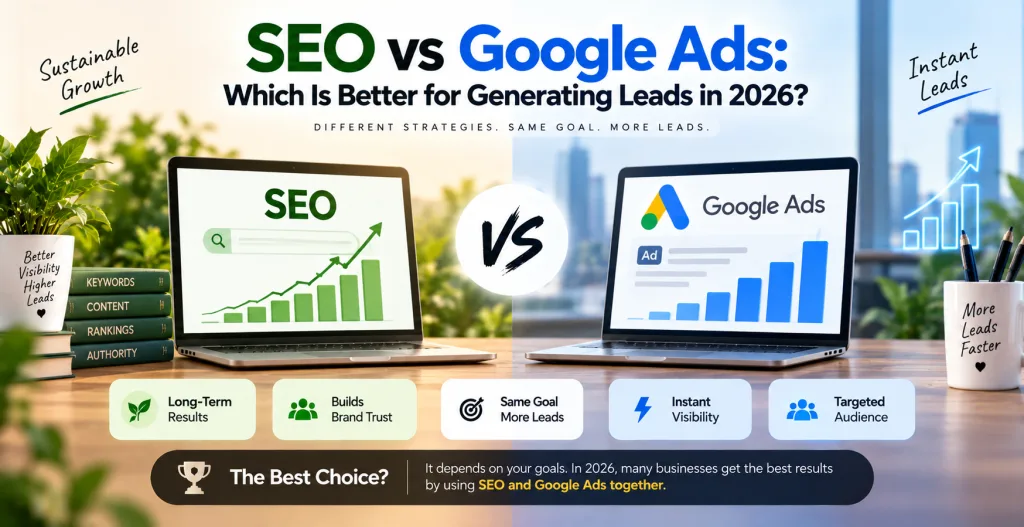
Businesses looking for steady lead generation in 2026 face a familiar question: should you invest in SEO or Google Ads Both channels bring visitors from Google search, yet they work in very different ways. One builds long-term visibility that continues working even after you stop spending. The other delivers immediate results that stop the moment the budget runs out.
This guide breaks down SEO vs Google Ads clearly. You will see how each channel generates leads, how they compare on cost, speed, and ROI, and when one makes more sense than the other for your business.
SEO vs Google Ads: What’s the Difference?
SEO (Search Engine Optimization) and Google Ads both aim to put your website in front of people searching on Google, but the methods and outcomes differ sharply.
SEO focuses on earning organic rankings through useful content, technical website improvements, and authority signals such as backlinks. When someone searches for a relevant term, your page can appear in the unpaid results. You do not pay Google for each click.
Google Ads (formerly AdWords) is a paid advertising platform. You bid on keywords, create ads, and pay only when someone clicks. Your ads appear at the top of search results, usually marked with an “Ad” or “Sponsored” label.
Key differences include:
- Payment model — SEO requires ongoing investment in content and optimization but no per-click fee. Google Ads charges for every click.
- Timeline — SEO results build gradually. Google Ads can start driving traffic within hours or days.
- Control — Google Ads gives precise control over targeting, budget, and messaging. SEO depends more on search engine algorithms.
- Sustainability — Organic rankings can continue delivering traffic for months or years. Paid traffic disappears when the campaign stops.
- User perception — Many searchers trust organic results more than paid ads.
Understanding these differences is the foundation of any smart decision in the SEO vs Google Ads debate.
How SEO Generates Leads for Your Business

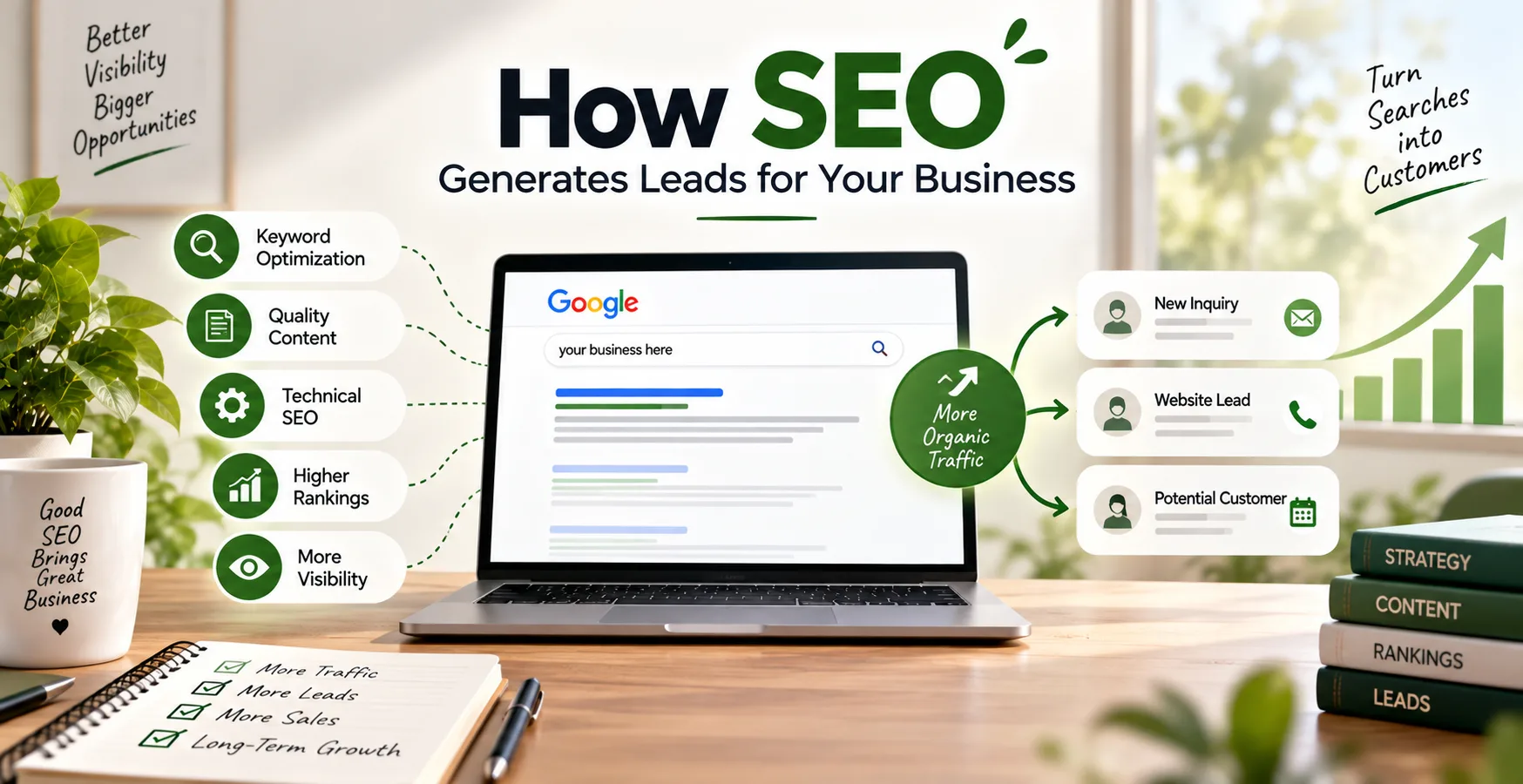
SEO generates leads by attracting people who are already searching for solutions related to your products or services. When your pages rank well for relevant keywords, visitors arrive with clear intent.
The process typically works like this:
- You create helpful content (blog posts, service pages, guides) that answers real search queries.
- Technical improvements help search engines crawl and understand your site.
- Consistent publishing and authority-building improve rankings over time.
- Visitors land on useful pages, learn about your offer, and convert through forms, calls, or purchases.
Because these visitors chose to click an organic result, they often show higher trust and better conversion rates than paid traffic. Once rankings are established, the cost per additional lead drops significantly. Content continues to attract visitors long after it is published, creating a compounding effect.
SEO works especially well for businesses that want steady, lower-cost leads over the long term and are willing to invest consistently for several months before seeing major results.
How Google Ads Generates Leads
Google Ads generates leads by placing your offer directly in front of people at the exact moment they search. You choose keywords, set a budget, write ad copy, and send traffic to landing pages designed to convert.
The main advantages are speed and precision:
- Campaigns can go live quickly and start generating clicks the same day.
- You can target specific locations, devices, times of day, and audiences.
- You control messaging tightly and can test different offers rapidly.
- Budget can be increased or decreased instantly based on performance.
Leads arrive as form fills, phone calls, or purchases. Because you pay per click, results are highly measurable. The downside is that traffic stops the moment you pause spending. There is no residual value once the budget ends.
Google Ads is particularly useful when you need leads quickly, want to test new markets, or operate in highly competitive niches where organic rankings take a long time to achieve.
SEO vs Google Ads: Which Is More Cost-Effective?
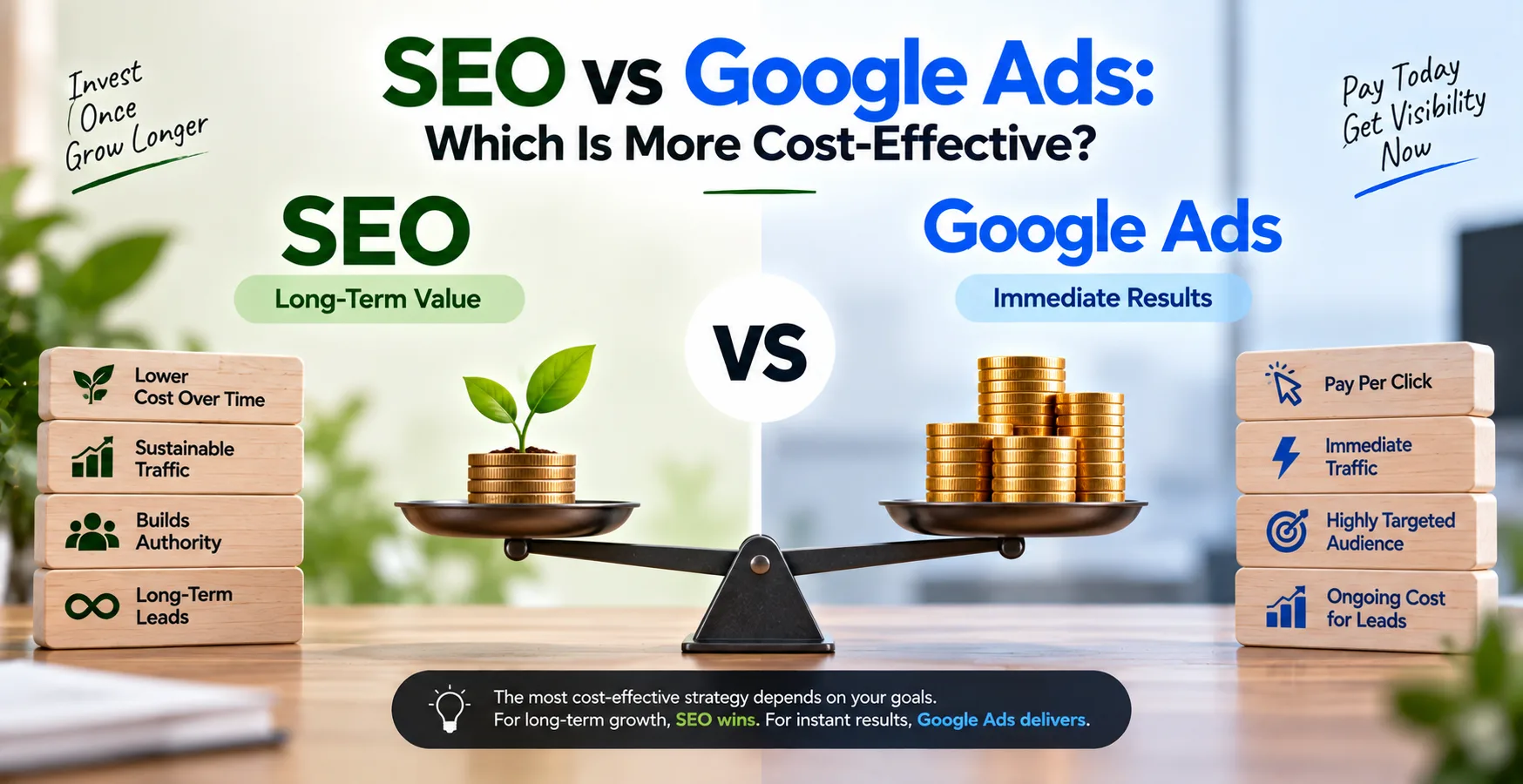
Cost-effectiveness depends heavily on the time horizon you measure.
In the short term, Google Ads often looks more expensive because every click has a direct cost. Average cost-per-lead figures commonly fall in a higher range than organic leads. In the long term, SEO usually becomes more cost-effective. Once pages rank, additional traffic arrives without a per-click fee, so the effective cost per lead declines over time.
A simplified comparison looks like this:
- Google Ads — Linear cost. Higher monthly spend generally brings more leads, but the cost per lead stays relatively stable (or rises with competition).
- SEO — Front-loaded investment. Early months may show higher cost per lead, but later months often deliver significantly lower cost per lead as traffic compounds.
Many businesses find that after 12–18 months of consistent SEO work, their organic cost per lead becomes substantially lower than what they pay through Google Ads for similar volume. The exact crossover point varies by industry, competition, and execution quality.
SEO vs Google Ads: Which Gives Faster Results?
| Aspect | Google Ads | SEO |
| Time to first results | Hours to a few days | 3–6 months for initial traction |
| Time to meaningful volume | 1–4 weeks | 6–12 months (or longer) |
| Visibility after launch | Immediate (once approved) | Gradual, builds over time |
| Dependence on ongoing spend | Traffic stops when budget stops | Traffic can continue after investment |
| Best for | Quick leads, launches, testing | Long-term, sustainable growth |
| Typical full impact timeline | Same month | 9–18 months for strong rankings |
SEO vs Google Ads: Which Has Better ROI?
Return on investment is where long-term differences become most visible.
Google Ads typically delivers a positive but more modest ROI. Industry averages often hover around $2 in revenue for every $1 spent, though strong campaigns in high-margin businesses can do better. The return remains tightly linked to ongoing spend.
SEO frequently shows higher long-term ROI. Because traffic continues without per-click costs, the return compounds. Studies and agency benchmarks commonly report SEO returning several times more value per dollar invested once rankings mature, sometimes in the range of 5x–8x or higher over multi-year periods.
Organic leads also tend to convert at higher rates in many industries because visitors perceive organic results as more trustworthy. This higher conversion quality further improves overall ROI.
When Should You Choose Google Ads?
Google Ads is the stronger choice in these situations:
- You need leads within days or weeks rather than months.
- You are launching a new product, service, or market and want fast validation.
- Your industry is extremely competitive and organic rankings will take a long time.
- You have a clear, trackable conversion (form, call, or purchase) and can measure results tightly.
- You want precise control over messaging, location targeting, and budget pacing.
- Seasonal demand or short-term promotions require immediate visibility.
Google Ads works best when speed and control matter more than long-term cost efficiency.
When Should You Choose SEO?
SEO is the better primary investment when:
- You can commit to consistent work for at least 6–12 months.
- You want to lower cost per lead over time and build a durable traffic asset.
- Your audience researches carefully before buying (common in B2B, professional services, and considered purchases).
- You want higher-trust traffic that often converts better than paid clicks.
- You prefer building long-term equity instead of renting visibility every month.
- Your budget is limited and you want results that continue after active spending slows.
SEO rewards patience and consistency. Businesses that treat it as a multi-year asset usually see the strongest returns.
SEO vs Google Ads: Which One Should Your Business Choose in 2026?

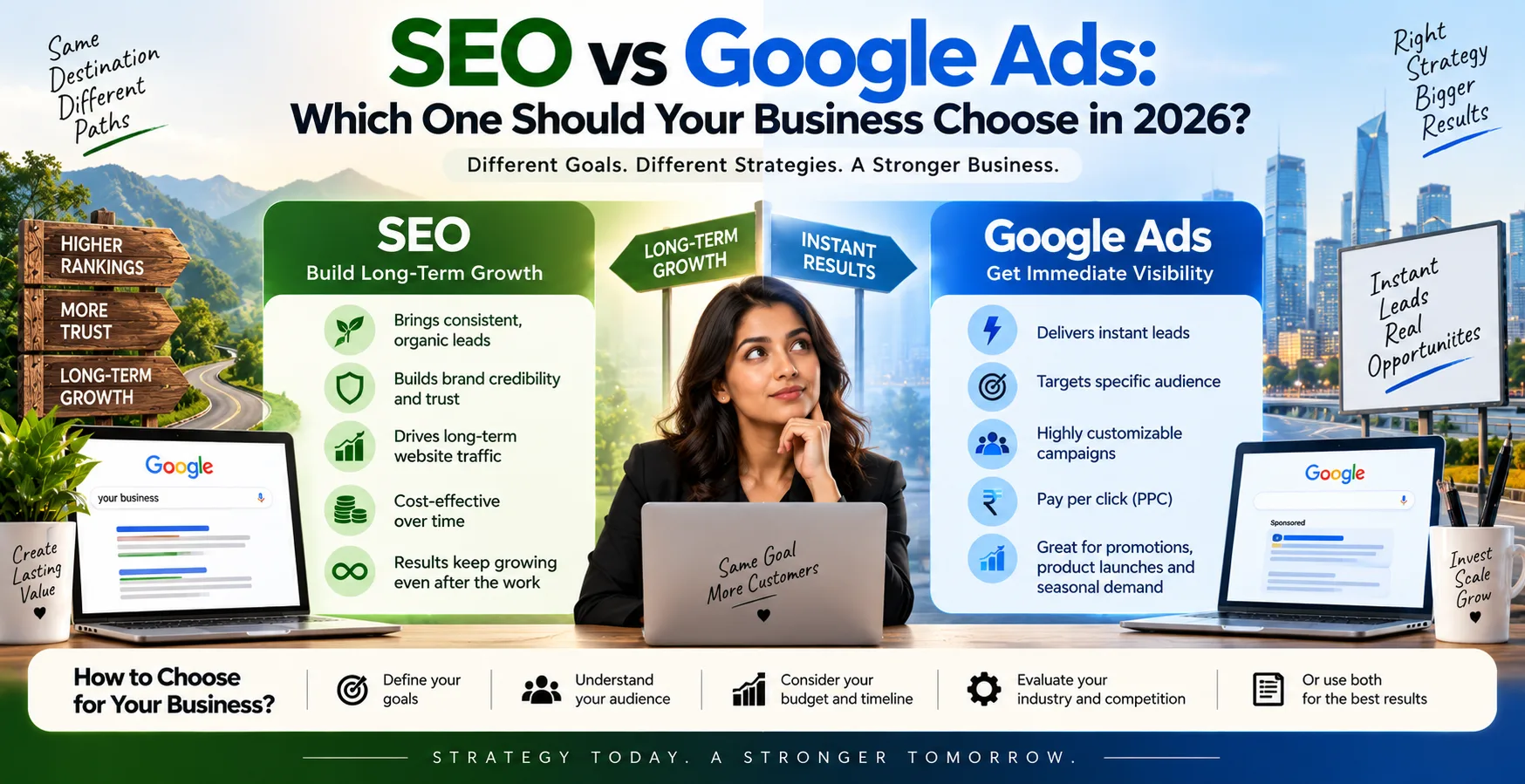
In 2026, the smartest answer for most businesses is not “either/or” but “both, sequenced intelligently.”
A practical approach looks like this:
- Use Google Ads to generate immediate leads and gather real conversion data while SEO work is underway.
- Invest steadily in SEO so that organic traffic and lower-cost leads grow over the following months.
- As organic rankings strengthen, gradually reduce dependence on paid traffic for the same keywords.
- Keep a smaller Google Ads budget for high-intent terms, new offers, or seasonal spikes.
This hybrid model captures the speed of paid search and the compounding value of organic search. It also reduces risk — if one channel slows, the other continues delivering.
Zaclab Technology offers professional SEO, Google Ads, and Web Development services to help businesses improve online visibility, generate quality leads, and grow digitally. From higher search rankings and targeted advertising to fast, user-friendly websites, our solutions are designed around your business goals.
Conclusion
In the ongoing debate of SEO vs Google Ads, there is no single winner that suits every business. Google Ads delivers speed, control, and immediate leads, making it the better choice when you need results this month. SEO builds durable, lower-cost traffic over time and usually delivers stronger long-term ROI once rankings take hold.
FAQ
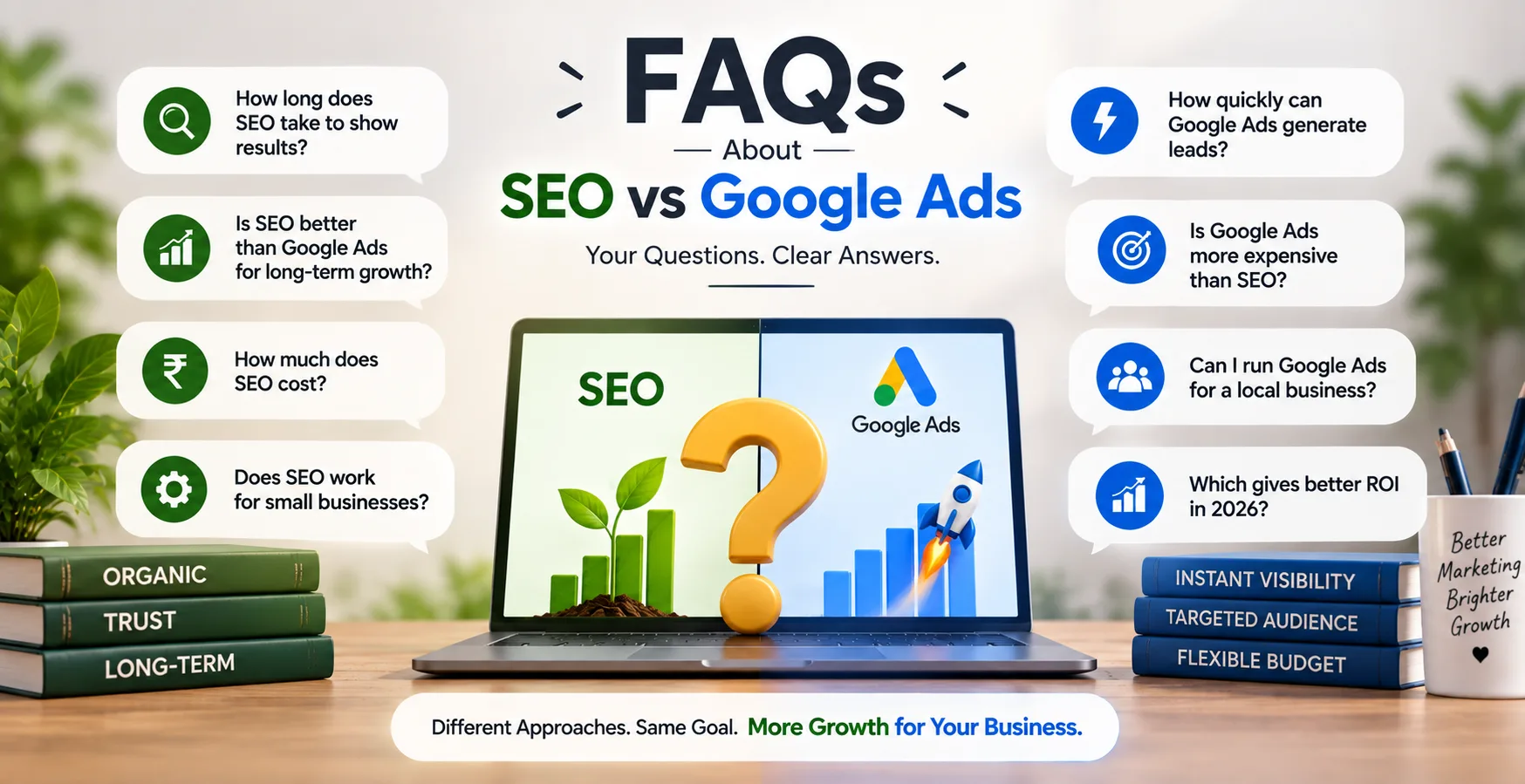
1.What is the main difference between SEO and Google Ads?
SEO focuses on earning free (organic) rankings through content, technical improvements, and authority. Google Ads is paid advertising where you bid on keywords and pay for each click. SEO builds long-term visibility; Google Ads delivers immediate but temporary results.
2.Which is better for generating leads quickly – SEO or Google Ads?
Google Ads is better for speed. Campaigns can start generating leads within days. SEO usually takes 3–6 months for initial results and 6–12 months for stronger, consistent lead flow.
3.Is SEO more cost-effective than Google Ads?
In the long run, yes. Once rankings are established, SEO traffic has no per-click cost, so the cost per lead often drops significantly. Google Ads requires ongoing spend, and the cost per lead stays relatively steady or rises with competition.
4.Which has better ROI – SEO or Google Ads?
SEO generally delivers higher long-term ROI because traffic continues without paying per click. Google Ads offers faster but more modest ROI that remains tied to continuous budget.
5.Can I use both SEO and Google Ads together?
Yes, and most businesses benefit from doing so. Google Ads provides quick leads while SEO builds sustainable organic traffic. Over time, you can reduce paid spend on keywords that start ranking organically.
6.How long does it take for SEO to show results?
Meaningful results typically appear in 3–6 months. Stronger, more stable rankings and higher lead volume usually take 6–12 months or longer, depending on competition and consistency of work.
7.When should a business choose Google Ads over SEO?
Choose Google Ads when you need leads immediately, are launching a new product or market, run seasonal campaigns, or operate in a highly competitive niche where organic rankings will take a long time.
8.When is SEO the better choice?
SEO is better when you can invest for 6–12 months or more, want lower cost per lead over time, prefer higher-trust traffic, and aim to build a long-term digital asset rather than rent visibility every month.
9.Do organic leads convert better than paid leads?
In many industries, yes. Organic visitors often show higher trust and intent because they click unpaid results. This frequently leads to better conversion rates compared to paid traffic.
10.Should a new business start with SEO or Google Ads?
Most new businesses benefit from starting with Google Ads for immediate visibility and lead flow, while beginning SEO work in parallel. This combination provides short-term results and builds long-term growth at the same time