Travel is one of the most competitive industries online. People research destinations, compare hotels, read reviews, and plan itineraries long before they book. If your travel website does not appear in those searches, you lose potential customers to competitors. A clear seo strategy for travel website helps you reach the right audience at the right time and turn search traffic into enquiries and bookings.
Why SEO Is Important for Travel Websites
Most travellers begin their journey on Google. They search for destinations, “best time to visit,” hotel options, tour packages, and local experiences. Organic search remains one of the highest-intent channels for the travel industry.
A strong seo strategy for travel website delivers:
- Consistent visibility without paying for every click
- Higher-quality traffic from people already interested in travel
- Better trust, because organic results are often seen as more credible than ads
- Long-term results that compound as content and authority grow
- Lower customer acquisition cost compared with continuous paid campaigns
Travel decisions involve research, comparison, and planning. SEO puts your website in front of users during each of these stages.
Understand Travel Search Intents

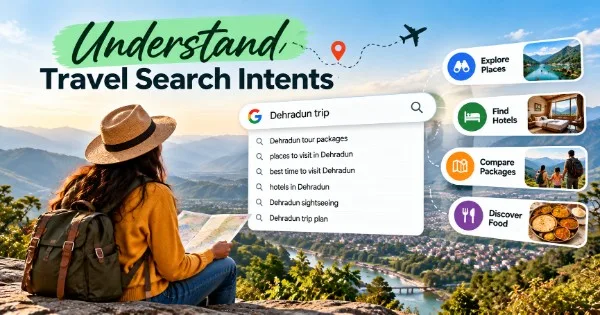
Travel searches fall into clear intent categories. Matching content to intent is the foundation of any effective seo strategy for travel website.
- Informational — “best places to visit in Kerala,” “how to reach Manali,” “what to pack for Bali”
- Navigational — brand or specific website searches
- Commercial investigation — “best hotels in Jaipur under 5000,” “Kerala package vs Goa package”
- Transactional — “book Rishikesh rafting,” “homestay in Manali with breakfast”
Create content that answers the exact stage the user is in. Informational pages build awareness and trust. Commercial and transactional pages drive enquiries and bookings.
Build a Keyword Strategy for Travel SEO
Keyword research for travel should go beyond generic terms. Focus on:
- Destination + intent keywords (e.g., “things to do in Rishikesh”)
- Seasonal and trend-based terms (“best time to visit Ladakh 2026”)
- Long-tail phrases that show clear intent (“family-friendly resorts near Mussoorie”)
- Problem-solving queries (“how to avoid altitude sickness in Leh”)
- Local and experience-based terms (“homestay with mountain view in Himachal”)
Group keywords into clusters around destinations, experiences, and traveller types (solo, family, honeymoon, adventure). This structure supports both content planning and internal linking within your seo strategy for travel website.
Create Destination-Focused Content

High-quality destination content is one of the strongest ranking and conversion assets for travel sites. Useful content types include:
- Complete destination guides
- Itinerary suggestions (3-day, 5-day, 7-day)
- Best time to visit and weather information
- How to reach and local transport options
- Hotel and stay recommendations by budget
- Food, culture, and practical tips
- Real photos and traveller experiences
Write for the reader first. Cover the questions a traveller actually has before, during, and after planning a trip. Well-structured destination pages also give you natural opportunities to link to related packages, stays, or booking pages.
Optimize Travel Website Pages
On-page optimisation remains essential. For every important page:
- Write a clear, benefit-focused title tag that includes the main keyword
- Use a compelling meta description that encourages clicks
- Structure content with descriptive H1, H2, and H3 headings
- Optimise images with descriptive file names and alt text
- Add internal links to related destination guides and booking pages
- Ensure the primary keyword and related terms appear naturally
- Include clear calls to action (enquire, check availability, view packages)
Avoid keyword stuffing. Focus on readability and usefulness. A well-optimised page that answers the user’s question will perform better than one written only for search engines.
Build a Strong Travel Website Structure
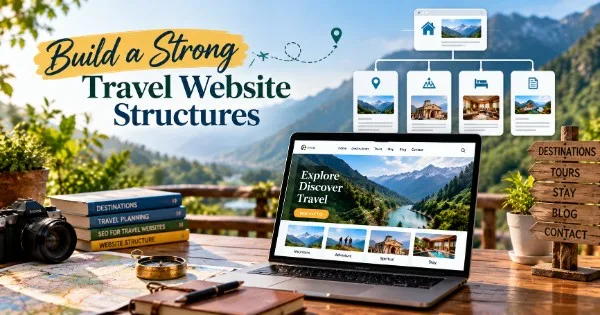
A logical website structure helps both users and search engines. Organise your site around clear categories such as:
- Destinations
- Tour packages or experiences
- Stays / hotels / homestays
- Travel guides and blog
- About and contact
Use clean, readable URLs. Create a simple navigation menu and a well-planned internal linking system so that important pages are easy to reach. A clear structure is a core part of any sustainable seo strategy for travel website.
Local SEO for Travel Businesses
If you run a local travel agency, tour operator, hotel, or experience provider, local SEO is critical.
- Claim and fully optimise your Google Business Profile
- Keep NAP (Name, Address, Phone) consistent across the web
- Encourage genuine customer reviews
- Add location pages if you serve multiple cities or regions
- Use local keywords where relevant (“travel agent in Dehradun,” “rafting in Rishikesh”)
- Ensure your website is mobile-friendly and loads quickly
Local visibility often drives high-intent enquiries from people ready to book.
Technical SEO for Travel Websites
Technical health supports all other SEO efforts. Pay attention to:
- Fast page loading speed (especially on mobile)
- Mobile responsiveness
- Secure HTTPS connection
- Clean crawlability and an updated XML sitemap
- Proper handling of duplicate content (especially for similar package pages)
- Structured data where relevant (for reviews, FAQs, or local business)
- Fixed broken links and redirect chains
Travel websites often contain many images and location pages. Regular technical checks prevent performance issues that can hurt rankings and user experience.
Build Authority With Travel Backlinks
Backlinks from relevant, trusted websites still play an important role. Focus on quality over quantity:
- Digital PR and travel media mentions
- Collaborations with travel bloggers and influencers
- Guest posts on reputable travel or lifestyle sites
- Partnerships with tourism boards or local businesses
- Creating shareable resources (guides, maps, data, or unique itineraries)
Avoid low-quality or spammy link schemes. Consistent authority building strengthens the overall seo strategy for travel website over time.
Use Reviews and User-Generated Content
Travellers trust other travellers. Reviews and user-generated content improve both conversion rates and SEO signals.
- Make it easy for customers to leave reviews
- Display ratings and reviews on relevant pages
- Encourage photos and real experiences from guests
- Respond to reviews professionally
- Feature authentic stories and testimonials in your content
Positive, genuine reviews help build trust and can support local rankings and click-through rates.
Measure and Improve Travel SEO Performance
Track the metrics that matter:
- Organic traffic and its growth over time
- Keyword rankings for priority destination and package terms
- Click-through rates from search results
- Bounce rate and time on page for key content
- Conversion rate from organic traffic (enquiries, bookings, calls)
- Page speed and Core Web Vitals
Use tools such as Google Search Console, Google Analytics, and rank trackers. Review performance regularly and refine content, technical issues, and targeting based on real data. Continuous improvement is what turns a basic effort into a long-term seo strategy for travel website.
Common SEO Mistakes Travel Websites Should Avoid
Many travel sites lose potential rankings because of avoidable errors:
- Publishing thin or duplicated destination content
- Ignoring mobile experience and page speed
- Keyword stuffing or writing only for search engines
- Neglecting internal linking between related pages
- Focusing only on competitive head terms and ignoring long-tail opportunities
- Letting technical issues (broken links, slow pages, poor crawlability) go unfixed
- Buying low-quality backlinks
- Failing to update seasonal or time-sensitive content
Avoiding these mistakes protects the investment you make in content and optimisation.
Looking for Expert Help With Your Travel Website?
Building a strong seo strategy for travel website takes consistent effort across content, technical health, local visibility, and authority. If you want professional support, Zaclabs offers complete digital solutions including SEO, social media services, and web developments.
Final Thoughts
A successful seo strategy for travel website is not a one-time project. It combines:
- Deep understanding of traveller search intent
- Strategic keyword targeting and content clusters
- High-quality, destination-focused content
- Strong on-page and technical foundations
- Local visibility where relevant
- Authority building through genuine backlinks and mentions
- Social proof from reviews and real experiences
- Ongoing measurement and refinement
Start with the pages and destinations that matter most to your business. Build useful content that answers real traveller questions. Keep the technical side healthy. Earn trust through reviews and quality experiences. Over time, these elements work together to deliver sustainable organic visibility and a steady flow of qualified travel enquiries.
10 FAQ About SEO Strategy for Travel Website

1. What is an SEO strategy for travel website?
An SEO strategy for travel website is a planned approach to improve organic visibility on search engines. It includes keyword research, destination-focused content, technical optimisation, localSEO, backlinks, and continuous performance tracking to attract travellers and generate bookings.
2. Why is SEO important for travel websites?
Most travellers research destinations, stays, and packages on Google before booking. A strong SEO strategy helps your website appear in those searches, builds trust, reduces reliance on paid ads, and delivers long-term, high-intent traffic.
3. How long does it take to see results from travel SEO?
Meaningful results usually appear in 3–6 months for new or moderately competitive keywords. Stronger rankings for competitive destination terms can take 6–12 months or longer, depending on competition, content quality, and consistency.
4. What type of content works best for travel SEO?
Destination guides, itineraries, “best time to visit” pages, how-to-reach information, experience-based articles, and practical travel tips perform well. Content that matches real traveller search intent ranks and converts better.
5. Should travel websites focus on local SEO?
Yes, especially if you are a travel agency, tour operator, hotel, or experience provider serving specific locations. Optimising your Google Business Profile, collecting reviews, and creating location pages helps attract high-intent local and near-me searches.
6. How important are backlinks for a travel website?
Backlinks from relevant travel blogs, tourism sites, and reputable publications help build authority. Quality matters more than quantity. Genuine mentions and collaborations support long-term rankings.
7. Can I do travel SEO without technical knowledge?
You can handle content and basic on-page SEO yourself, but technical issues like site speed, mobile-friendliness, crawl errors, and structured data often need professional help for best results.
8. What are the most common SEO mistakes travel websites make?
Thin or duplicated content, ignoring mobile experience, poor internal linking, focusing only on highly competitive keywords, neglecting reviews, and failing to fix technical problems are frequent mistakes.
9. How do reviews help travel SEO?
Genuine reviews improve trust and click-through rates. They also support local rankings and give potential customers social proof, which increases the chances of enquiries and bookings.
10. Who can help implement an SEO strategy for a travel website?
Digital agencies like Zaclabs offer complete support including SEO, social media services, and web development. They help travel brands build a structured strategy, improve website performance, and grow organic traffic over time.