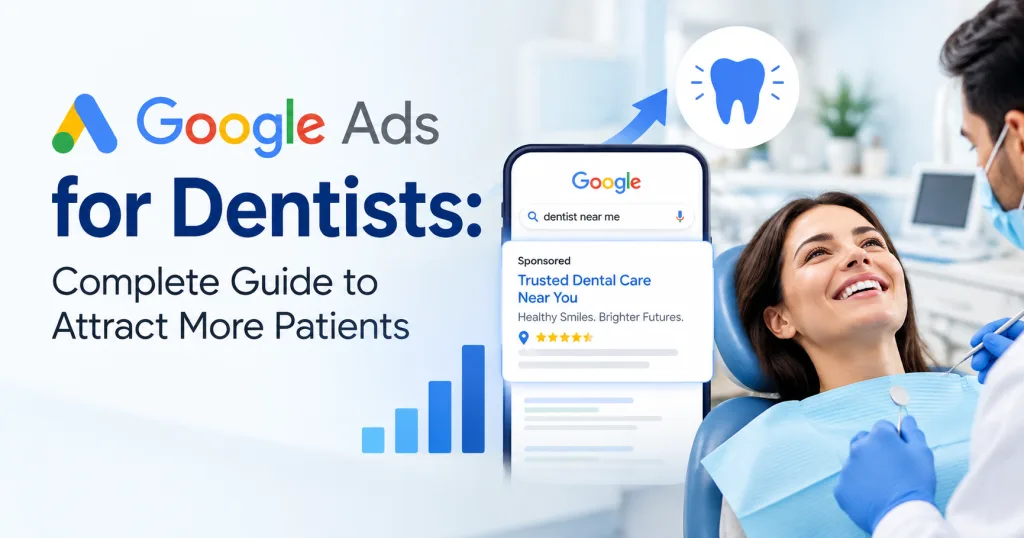
Google Ads for Dentists: A Complete Guide to Attracting More Local Patients
Dental practices face constant competition for new patients. Many people search online the moment they need a cleaning, emergency care, or a specialized treatment. This is where google ads for dentists become highly effective. When set up correctly, these ads place your clinic in front of people who are actively looking for dental services in your area.
This guide explains why Google Ads matter for dental clinics, how they attract local patients, which ad types work best, keyword selection, targeting, costs, ad creation, landing pages, tracking, common mistakes, performance improvement, and whether you should hire an agency.
Why Google Ads Are Important for Dental Clinics

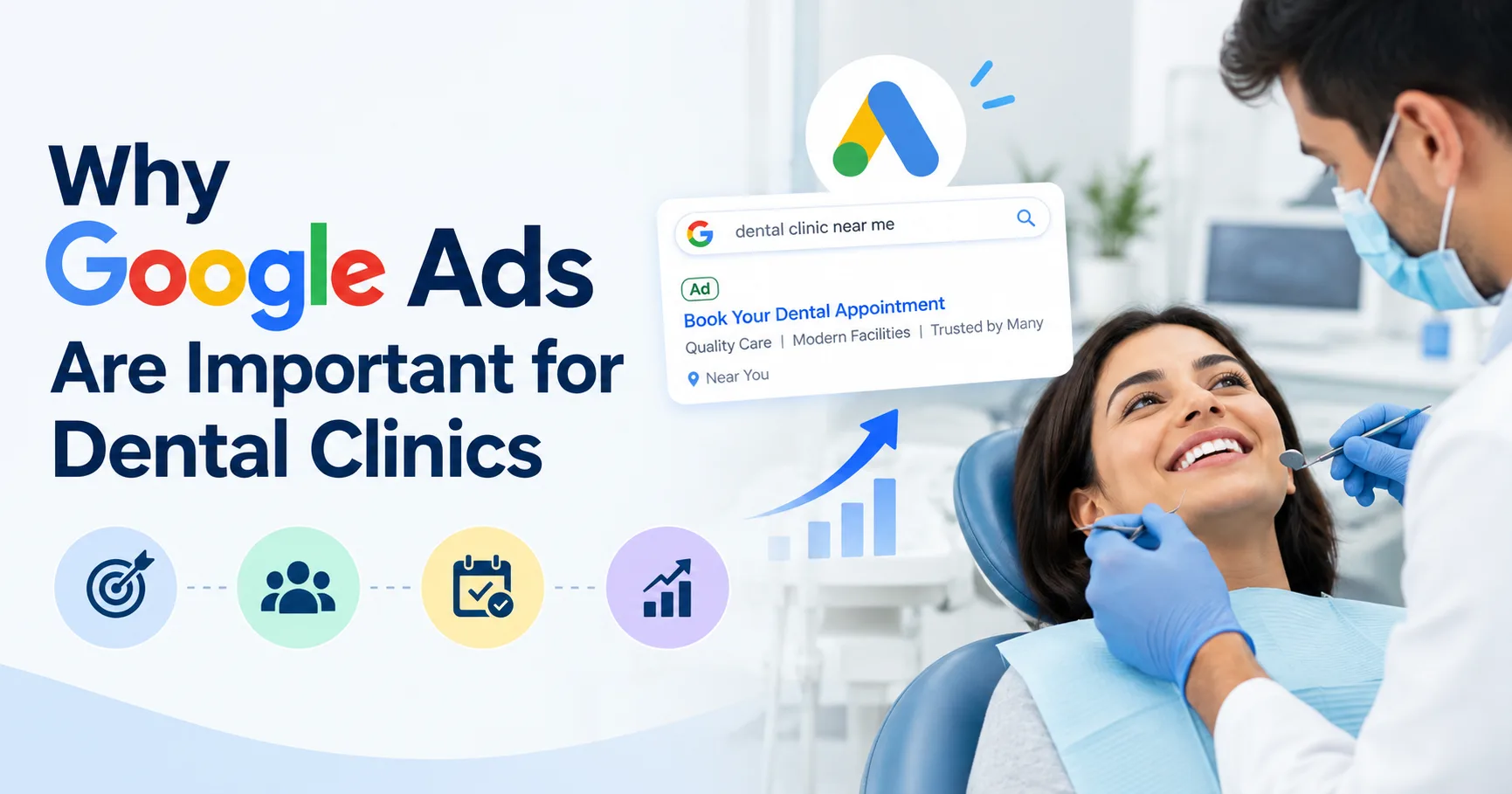
Most patients start their search for a dentist on Google. Searches such as “dentist near me,” “emergency dentist,” or “dental implants in [city]” show clear intent. Google ads for dentists allow your practice to appear at the top of these results immediately.
Key reasons they matter:
- You reach people at the exact moment they need dental care
- You can target specific services (implants, Invisalign, emergency care)
- Results appear quickly compared with organic SEO
- You control budget, location, and messaging
- High-intent searches often convert into booked appointments
Unlike traditional advertising, Google Ads only charges when someone clicks, making spend more accountable.
How Google Ads Help Dentists Attract Local Patients
Google Ads help dental clinics connect with nearby patients through precise location targeting and service-specific messaging. When someone searches for a dentist in your city or neighborhood, your ad can appear above organic results.
Practical ways this works:
- Radius targeting around your clinic
- City or zip-code targeting
- Ad copy that mentions your location and services
- Call extensions that let mobile users phone you directly
- Location extensions that show your address and map
Because dental care is highly local, most patients prefer a clinic within a short drive. Well-managed google ads for dentists focus budget only on the areas you actually serve.
Which Types of Google Ads Work Best for Dentists
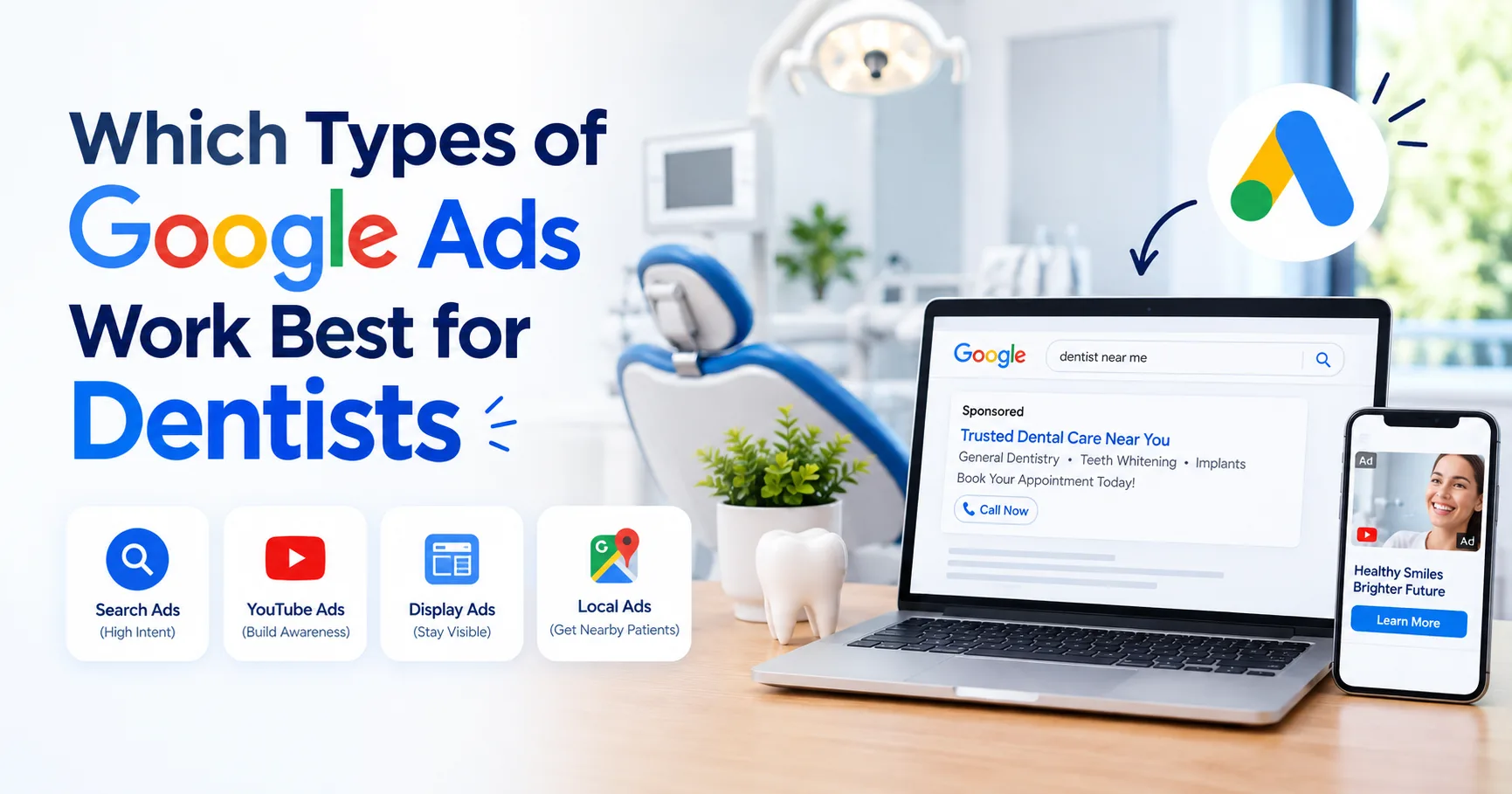
Not every Google Ads format suits dental practices equally. The most effective options include:
- Search Ads – Appear when people type dental-related keywords. These deliver the highest intent and usually the best return.
- Local Services Ads (LSAs) – Show at the very top with a “Google Guaranteed” badge. You pay per lead rather than per click (availability depends on region).
- Call-Only Ads – Ideal for emergency or same-day appointment searches on mobile.
- Remarketing – Re-engage people who visited your website but did not book.
- Performance Max – Useful once you have enough conversion data, though Search campaigns should usually come first.
Most dental clinics see the strongest results by starting with Search campaigns and Local Services Ads, then expanding carefully.
How to Choose the Right Keywords for Dental Google Ads
Keyword selection determines both cost and quality of leads. Focus on terms that show clear patient intent.
High-performing keyword categories:
- General / local – “dentist near me,” “family dentist [city],” “dentist accepting new patients”
- Emergency – “emergency dentist near me,” “toothache dentist open now,” “dentist open Saturday”
- High-value procedures – “dental implants [city],” “Invisalign near me,” “cosmetic dentist [city]”
- Service-specific – “teeth cleaning near me,” “root canal dentist,” “dental crown near me”
Avoid overly broad or purely informational terms that attract researchers rather than patients ready to book. Use exact and phrase match more than broad match, and build a strong negative keyword list (for example, “jobs,” “salary,” “DIY,” “school”).
How to Target Local Patients With Google Ads
Local targeting is essential for google ads for dentists. Patients rarely travel long distances for routine care.
Effective targeting methods:
- Set a radius of 5–15 miles around your clinic (adjust based on urban vs suburban density)
- Target specific zip codes or neighborhoods you serve
- Exclude areas outside your practical service zone
- Use location insertion in ad headlines (“Dentist in [City]”)
- Schedule ads to run during office hours or when your team can answer calls
For high-value treatments such as implants, patients may travel farther, so you can expand the radius for those specific campaigns.
How Much Do Google Ads Cost for Dentists
Costs vary by location, competition, and service type. Recent benchmarks show:
- Average cost-per-click (CPC) for dental keywords often falls between $5 and $8
- General dentistry terms are usually lower; implants and emergency terms cost more
- Typical cost per lead ranges from roughly $50 to $85 for well-managed campaigns
- Solo practices often start with monthly budgets of 1,000–3,000
- Multi-doctor or specialty practices may spend 3,000–10,000+
Because lifetime patient value is high, even moderate cost-per-lead figures can deliver strong returns when tracking and conversion rates are solid.
How to Create High-Converting Google Ads for Dental Services
Effective ad copy speaks directly to patient needs and includes a clear next step.
Strong elements include:
- Specific service + location in the headline (“Emergency Dentist in [City]”)
- Trust signals (years of experience, patient ratings, “accepting new patients”)
- Clear call-to-action (“Book Online,” “Call Now,” “Same-Day Appointments”)
- Benefits such as financing options, evening hours, or pain-free treatment
- Ad extensions: call, location, sitelinks, and structured snippets
Responsive Search Ads allow Google to test multiple headlines and descriptions. Keep messaging honest and focused on what patients care about most—relief, convenience, and trust.
Why Dental Landing Pages Matter for Patient Conversions

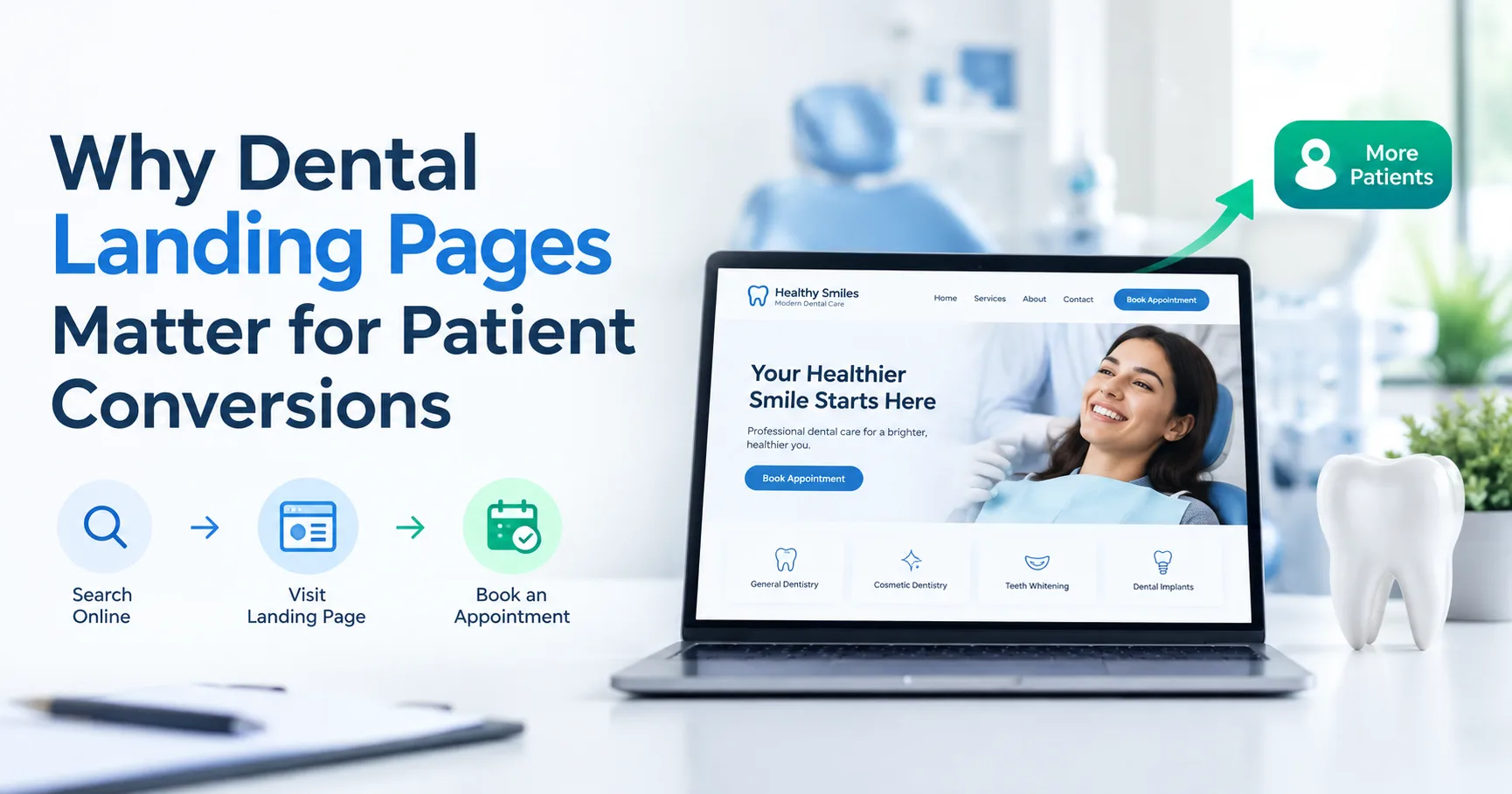
Sending ad traffic to your homepage usually lowers conversion rates. Dedicated landing pages perform better because they match the ad’s promise.
A strong dental landing page should include:
- Clear headline matching the ad
- Prominent phone number and online booking button
- Short explanation of the specific service
- Trust elements (photos of the clinic, team, reviews)
- Simple form for appointment requests
- Mobile-friendly design and fast loading speed
Separate landing pages for emergency care, implants, Invisalign, and new-patient offers typically improve results.
How to Track Calls, Appointment Requests, and Conversions
Without proper tracking, you cannot know which ads and keywords actually produce patients.
Essential tracking setup:
- Google Ads conversion tracking for form submissions
- Call tracking (Google forwarding numbers or a call-tracking provider)
- Online booking integration where possible
- Google Analytics 4 linked to Google Ads
- Offline conversion import if your team records booked appointments from calls
Track meaningful actions—calls, form fills, and booked appointments—rather than just clicks or page views.
Common Google Ads Mistakes Dental Practices Should Avoid
Many dental campaigns underperform because of avoidable errors:
- Sending all traffic to the homepage instead of dedicated landing pages
- Using only broad match keywords without negatives
- Targeting too wide a geographic area
- Ignoring mobile experience and call extensions
- Not tracking phone calls
- Running one generic campaign for every service
- Setting budgets too low to gather useful data
- Writing vague ad copy without clear calls-to-action
Avoiding these mistakes significantly improves the efficiency of google ads for dentists.
How to Improve Google Ads Performance for a Dental Clinic
Ongoing optimization keeps results strong:
- Review search terms weekly and add negative keywords
- Pause low-performing ads and keywords
- Test new headlines and landing page variations
- Adjust bids by device, location, and time of day
- Improve Quality Score through better ad relevance and landing pages
- Separate campaigns by service line (general, emergency, implants, cosmetic)
- Monitor cost per lead and booked-patient rate, not just clicks
Consistent small improvements usually produce better long-term results than large, infrequent changes.
Should You Hire a Google Ads Agency for Your Dental Practice
Managing Google Ads well requires time, technical knowledge, and continuous testing. Some practices handle campaigns in-house successfully. Others prefer to hire a specialist.
Consider an agency or specialist when:
- You lack time to manage and optimize campaigns regularly
- Competition in your area is high
- You want faster, more reliable patient flow
- You need proper tracking and reporting set up
- Previous DIY campaigns produced expensive or low-quality leads
Choose a partner with proven dental or healthcare experience, transparent reporting, and a focus on actual patient appointments rather than vanity metrics.
Looking for Expert Support
Zaclab helps dental clinics grow with focused digital services:
- Google Ads – Campaign setup, local targeting, keyword strategy, and ongoing optimization to attract more patients
- SEO – Long-term visibility so your clinic ranks for important local and service-based searches
- Web Development – Fast, mobile-friendly websites and high-converting landing pages designed for dental practices
With the right combination of Google Ads, SEO, and a strong website, dental clinics can generate consistent patient enquiries and build sustainable growth.
Conclusion
Google ads for dentists remain one of the most direct ways to attract local patients who are ready to book. Success depends on the right campaign structure, careful keyword selection, precise local targeting, strong landing pages, and accurate conversion tracking. When managed thoughtfully, the investment often pays for itself through higher patient volume and long-term practice growth. Start with clear goals, measure real appointments, and refine continuously for the best results
10 FAQs About Google Ads for Dentists
- Why are Google Ads important for dental clinics?
Most patients search online when they need a dentist. Google Ads place your clinic at the top of search results for terms like “dentist near me” or “emergency dentist,” helping you attract people who are ready to book. - How do Google Ads help dentists get more local patients?
They use location targeting (radius, city, or zip code) so your ads only show to people near your clinic. Call and location extensions make it easy for local patients to contact you or find your address. - Which type of Google Ads works best for dentists?
Search Ads usually perform best because they target high-intent searches. Local Services Ads and Call-Only Ads are also effective, especially for emergency and same-day appointment queries. - What keywords should dentists target?
Focus on high-intent local terms such as “dentist near me,” “emergency dentist [city],” “dental implants near me,” “Invisalign [city],” and “family dentist accepting new patients.” - How much do Google Ads cost for dentists?
Average cost-per-click often ranges from $5 to $8. Cost per lead typically falls between $50 and $85 in well-managed campaigns. Monthly budgets for solo practices commonly start at 1,000–3,000. - Do I need a special landing page for dental ads?
Yes. Sending traffic to a dedicated service page (instead of the homepage) usually improves conversions. The page should match the ad, load quickly on mobile, and make booking or calling easy. - How can I track phone calls and appointments from Google Ads?
Use Google Ads conversion tracking, call tracking numbers, and (where possible) online booking integration. Track form submissions, calls, and actual booked appointments for accurate results. - What are common mistakes dentists make with Google Ads?
Common errors include targeting too wide an area, using only broad match keywords, sending all traffic to the homepage, ignoring call tracking, and running one generic campaign for every service. - Can Google Ads work together with SEO for a dental practice?
Yes. Google Ads deliver fast results while SEO builds long-term organic visibility. Many successful clinics use both channels together. - Should a dental clinic hire an agency for Google Ads?
If you lack time or expertise, hiring a specialist can help. Agencies like Zaclab offer Google Ads management along with SEO and web development, so clinics can attract more patients with properly optimized campaigns, tracking, and high-converting websites.